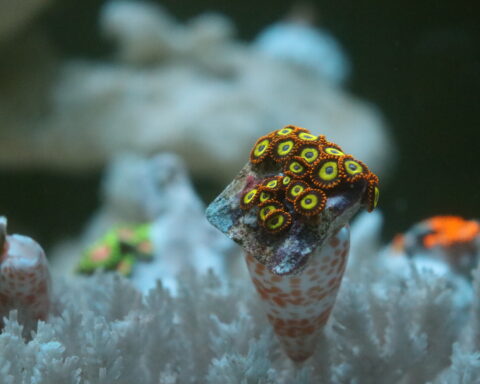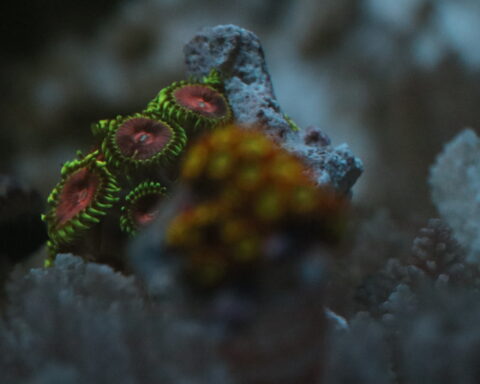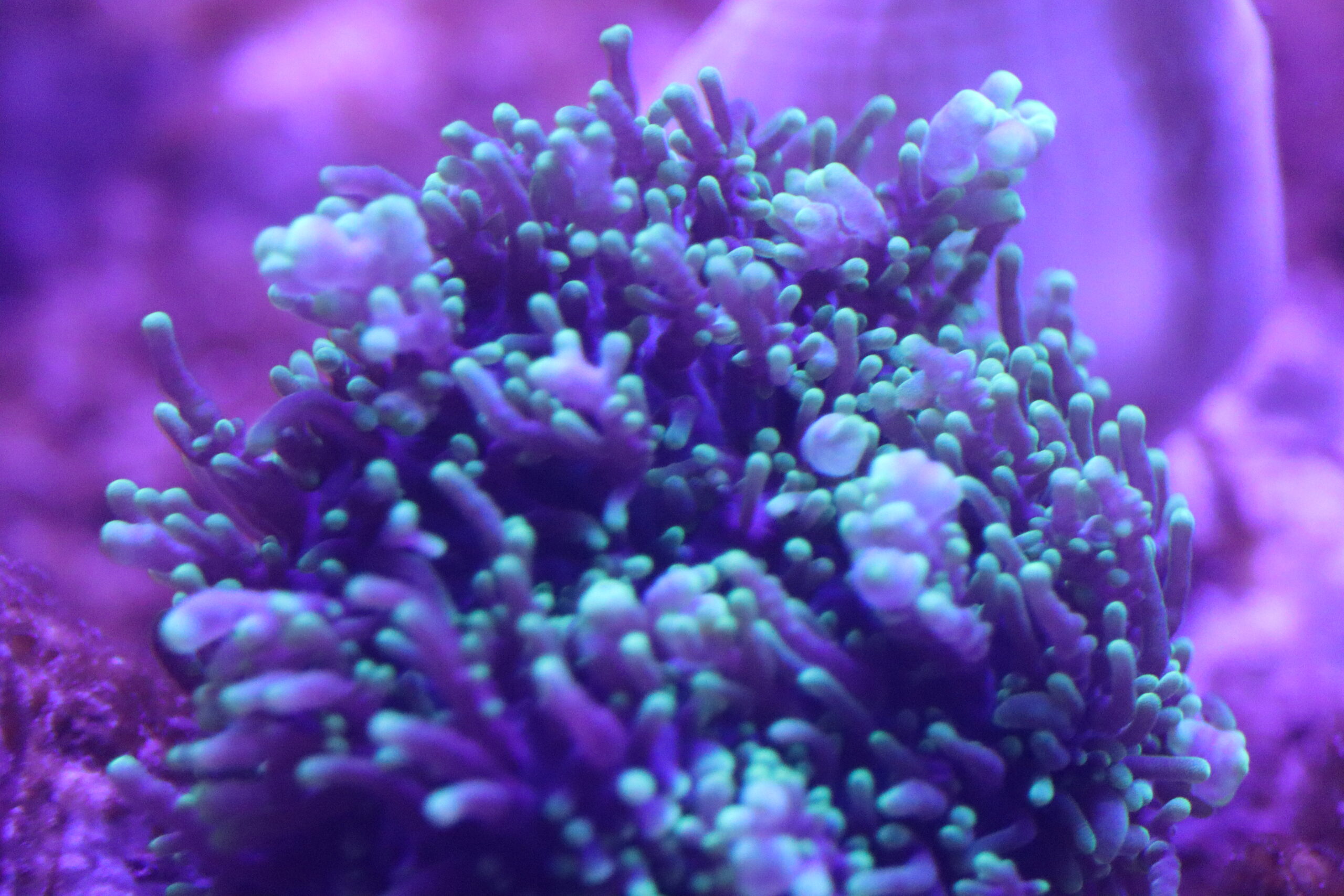


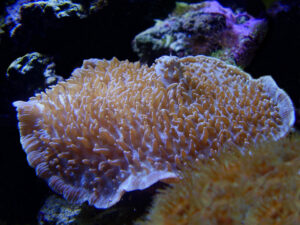
The Hairy Mushroom | Rhodactis indosinensis is one of the most durable corals in our hobby. It is sometimes mixed up with Green star Polyp, but at closer incpection it is clear that it is not!
Colorations
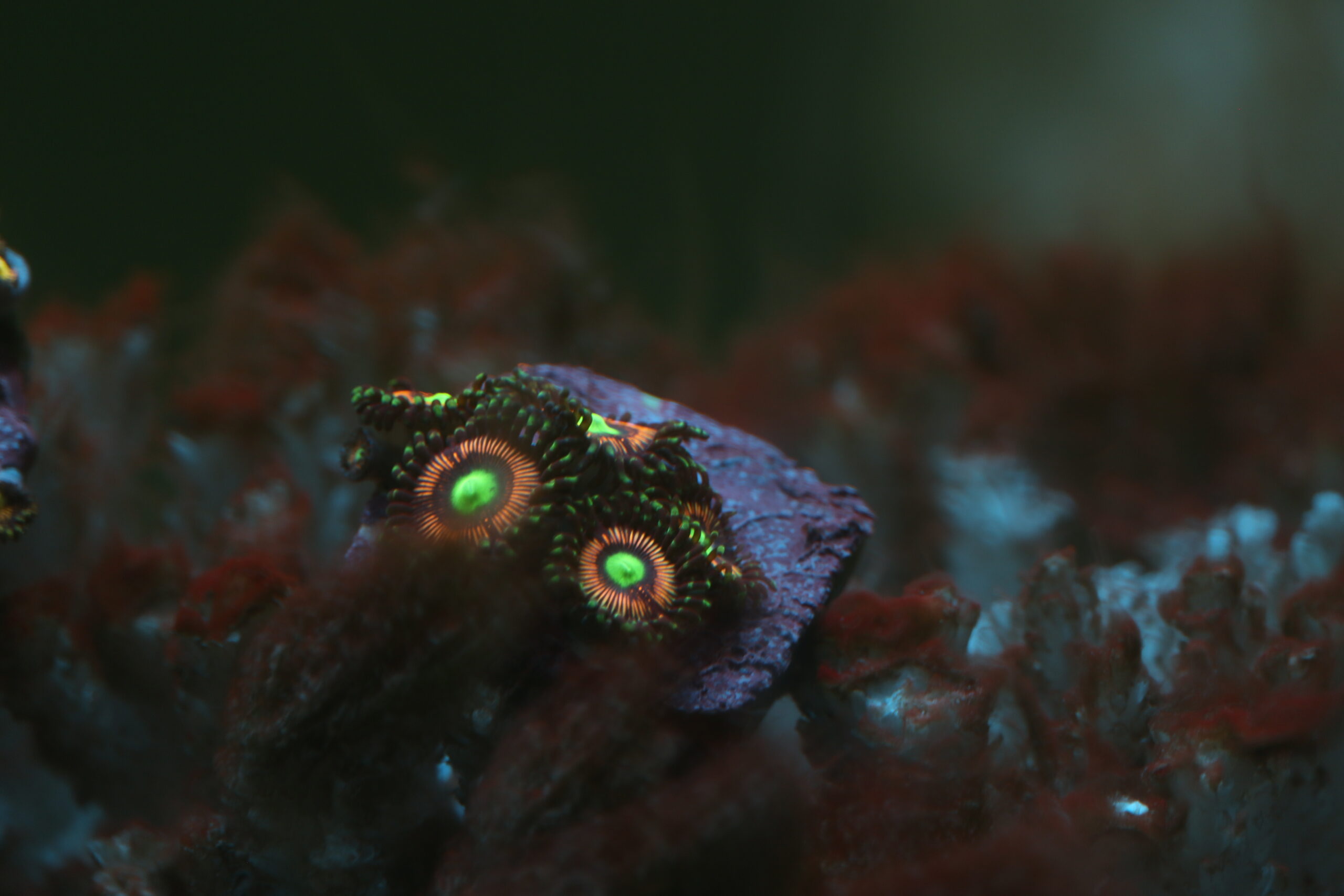
Most are a variation of green hairs with purple-brown bodies. In the hobby you will sometimes see teal hairs, but might be dependent on conditions. At times the colors of the body and the hairs are reversed. Vivid Greens come command higher prices.
It is interesting to see the difference in color from the body to hairs. Some individuals have 2 types of hairs, a more bulky “bounce mushroom look” and the regular straight hairs that most Hairy Mushroom | Rhodactis indosinensis have! The bounces are often more lightly colored.
Shapes
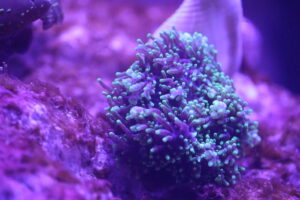
Hairy Mushroom | Rhodactis indosinensis like all mushrooms come in leaves that have a central foot below and a central mouth right above it. Its hairs have usually one straight shape like a hair with a colored tip.
There are some more bounce-like corals in theis family that have the ocational more bulky and multi-tipped hair.
Up close
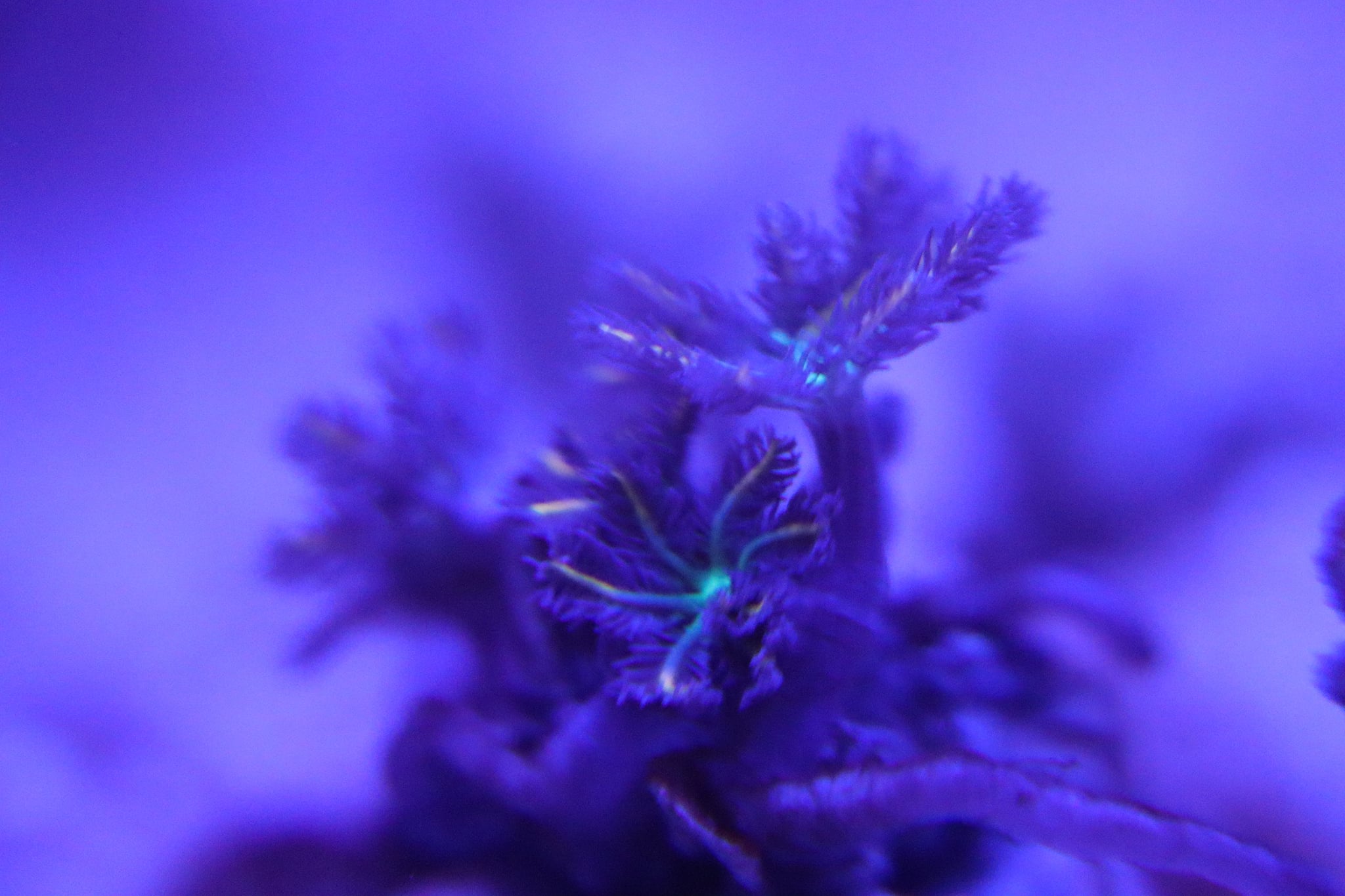
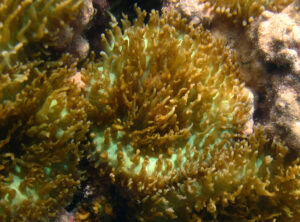
In the photo I took of my specimen -I bought it from Aberaquatic.com in December 2021- you can see the vivid green tip, with both variations.
Care
Circulation
This coral needs a slow current , it will tolerate near stagnant current and medium flow.
Lighting
Hairy Mushroom | Rhodactis indosinensis does not need much light. If acclimated to non-harsh light , it will tolerate it. Low and non-reef lights are also possible, if not perfect.
Feeding
It can be fed almost anything. It closes up around the food that falls on to it, but this is a vary slow movement so turning off the current is advised.
Growth
Hairy Mushroom growth is classic pedal laceration It moves across the the rock and later separates from its previous location leaving a “baby” behind.
Propagation
Other that pedal laceration you can cut this one up in half. I have seen quarters, but would not do it. It is like most soft leathers, difficult to attatch, so glues are not advised. Elastic bands or low flow areas to let it attach itself.
Bibliography – sources
https://commons.wikimedia.org/wiki/File:Rhodactis_indosinensis_%C3%A0_confirmer.jpg